 seolounge


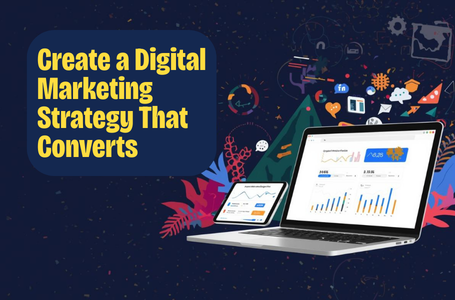
In today’s fast-moving online world, every business wants more leads, more sales, and better results from digital marketing. But many brands still struggle because they don’t have a clear plan. A strong digital marketing strategy is not just about posting on social media or running ads—it’s about creating a system that attracts the right audience and converts them into paying customers.
In this blog, you’ll learn how to build a digital marketing strategy that actually converts in 2026, using simple steps you can apply from day one.
1. Know Your Audience Clearly
Before running any campaign, understand who your ideal customer is.
Ask yourself:
- Who are they?
- What problems do they want to solve?
- What content do they search for online?
- Where do they spend most of their digital time?
Create a simple “buyer persona” with age, location, interests, and buying behavior.
When you know your audience well, your marketing becomes more targeted and effective.
2. Set Clear and Measurable Goals
Many businesses start marketing without clear goals.
In 2026, you must follow SMART goals:
- Specific
- Measurable
- Achievable
- Relevant
- Time-bound
Examples:
- “Get 300 leads per month.”
- “Increase website traffic by 40% in 3 months.”
- “Improve social media engagement by 50%.”
Goals keep your strategy focused.
3. Optimise Your Website for Conversions
Your website is your digital shop. No matter how many people you reach through ads or social media, if the website doesn’t convert, you lose money.
Make sure your website has:
- Fast loading speed
- Clear call-to-action buttons (Book Now, Contact Us, Get Quote)
- Mobile-friendly design
- Simple navigation
- Trust signals (reviews, certifications, case studies)
A good website is the strongest tool for conversions.
4. Use SEO to Get Free Organic Traffic
SEO helps your website appear in Google searches without paid ads.
In 2026, Google is focusing more on:
- User experience
- Helpful content
- AI-generated search results
- Local and voice search
Focus on:
- High-quality content
- Keyword research
- Technical SEO
- Google Business Profile optimisation
- Local SEO if you serve specific locations
SEO brings long-term results.
5. Create Content That Solves Problems
Content is still the king in 2026—but now, helpful content wins.
Create content that:
- Answers common questions
- Solves problems
- Educates your audience
- Builds trust
Best content formats:
- Blogs
- Videos
- Carousels
- Reels
- Infographics
- How-to guides
When your content is useful, people naturally trust your brand.
6. Use Social Media the Right Way
Stop posting only “salesy” content.
Instead, follow the 3-E formula:
- Educate
- Entertain
- Engage
Use platforms like Instagram, Facebook, LinkedIn, and TikTok based on your audience.
Share:
- How-to posts
- Customer stories
- Behind-the-scenes
- Tips
- Reels
- Polls
- Q&A sessions
Social media builds brand awareness and warms up potential customers.
7. Run Targeted Ads for Fast Results
Paid ads give quick conversions when done correctly.
Use:
- Meta Ads (Facebook + Instagram)
- Google Search Ads
- YouTube Ads
- Local Service Ads
Make sure your ads are:
- Targeted to the right audience
- Linked to a strong landing page
- Simple and clear in message
- Backed with a strong CTA (Call to Action)
Ads + SEO = high visibility + high conversions.
8. Use Email & WhatsApp Marketing for Follow-ups
Many leads do not convert immediately.
Use:
- Email newsletters
- Automated follow-ups
- WhatsApp broadcast messages
- CRM reminders
Share value like:
- Offers
- Updates
- Guides
- New content
Following up increases conversions by 30–50%.
9. Analyse Your Results and Improve
A strategy works only when you measure it.
Track:
- Website analytics
- Ad performance
- Social media reach
- Lead quality
- Conversion rate
Use tools like:
- Google Analytics
- Google Search Console
- Meta Ads Manager
- CRM dashboards
Check what’s working, fix what’s not, and repeat.
10. Why This Strategy Works in 2026
This approach works because it focuses on what truly matters today—audience understanding, useful content, data-driven decisions, and consistent optimisation.
In 2026, customers have more choices, ads are more competitive, and attention spans are shorter. A converting digital marketing strategy is not just about posting more—it’s about being relevant, helpful, visible, and trustworthy at every stage of the customer journey.
When all parts—SEO, ads, content, website, CRM, and analytics—work together like a system, your business gains:
- Higher-quality leads
- Lower cost per conversion
- Better brand recall
- Strong customer relationships
- Long-term growth
This is how businesses in 2026 can stay ahead and turn digital marketing into real results.
