 seolounge



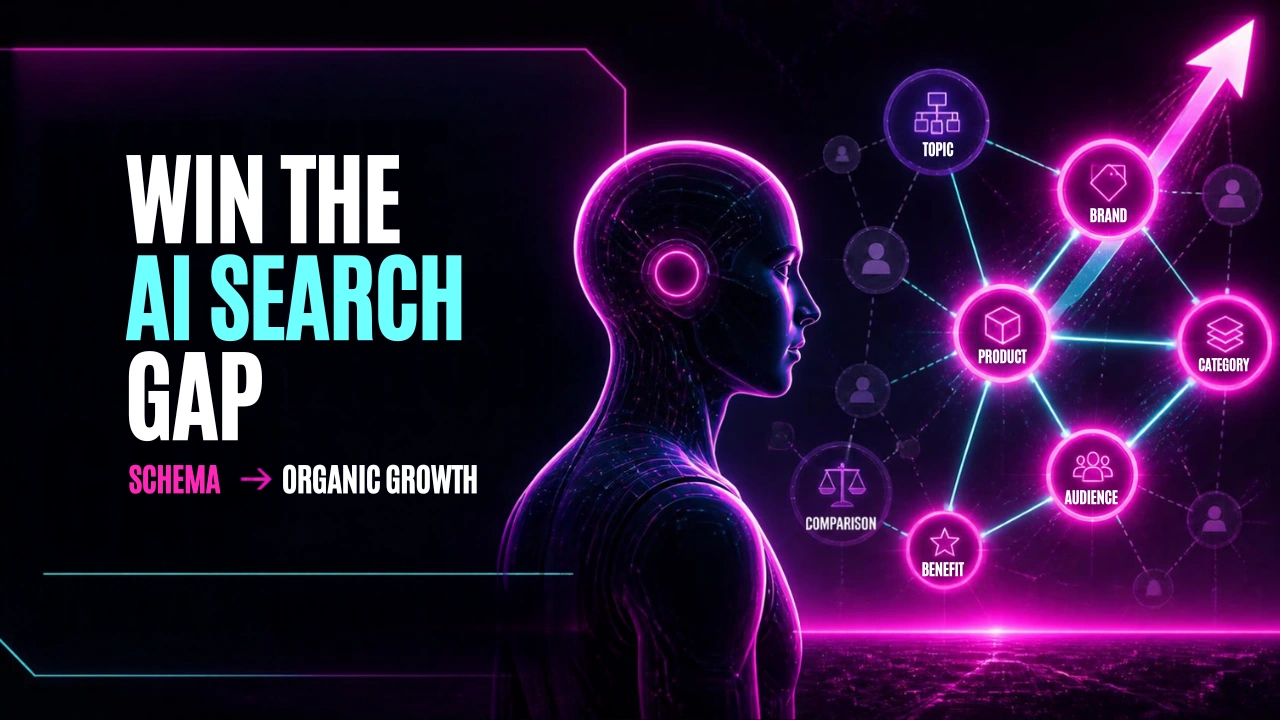
Search is changing quickly. People are no longer using Google only to find a list of website links. AI-powered search features can now understand questions, connect information from different sources, and provide direct answers.
For businesses, this creates a new challenge. It is no longer enough to have useful content on a website. Search engines and AI systems also need to understand who you are, what your business does, what you offer, and how different pieces of information on your website are connected.
This is where schema markup and entity optimization can help.
Schema markup gives search engines structured information about a webpage. When used correctly, it can make important details easier for search engines to understand. Combined with a strong entity strategy, schema can help businesses build a clearer digital presence and address information gaps that may limit organic visibility.
What Is Schema Markup?
Schema markup, also called structured data, is code added to a webpage to help search engines understand its content.
For example, a restaurant website may contain information about its name, address, opening hours, menu, reviews, and location. Schema can help identify these details in a structured format.
Similarly, an ecommerce website can use structured data to describe products, prices, availability, and other relevant information.
Schema does not replace good content or guarantee higher rankings. Its main purpose is to provide search engines with clearer information about the content and entities on a page.
What Are Entities in Search?
An entity is a person, organization, place, product, service, or other clearly identifiable thing.
For example, a company can be an entity. Its services, founders, locations, products, and official website can all be connected to that entity.
Search engines use information from many sources to understand entities. If important information is missing, inconsistent, or unclear, it may be harder for systems to build a complete understanding of a business.
These missing connections are often described as entity gaps.
How Entity Gaps Can Affect AI Search
AI-powered search depends on understanding relationships between different pieces of information.
Imagine a digital marketing agency has a website that clearly lists SEO and PPC services. However, its business name, organization details, service information, location, and other important details are inconsistent across the web.
An AI-powered search system may have less reliable information to work with.
Schema can help by clearly describing the relationships between your organization, website, services, products, and other relevant entities.
This does not guarantee that an AI system will mention your business. However, clearer structured information can make it easier for search engines to interpret your website.
Schema Types Businesses Should Understand
Different types of schema are designed for different types of content.
An organization can use Organization schema to provide structured information about a company. A local business can use LocalBusiness schema when appropriate.
For products, Product schema can describe product information. Ecommerce websites may also use relevant offer and review markup when they meet Google’s requirements.
Websites publishing articles can use Article schema, while frequently asked questions and other content types have their own structured data guidelines.
The important point is to use schema that accurately represents the visible content on the page.
Turning Entity Gaps Into Growth Opportunities
The first step is to identify what information about your business is missing or unclear.
Start with your own website. Check whether your business name, services, contact information, locations, authors, products, and other important entities are clearly explained.
Next, look for inconsistencies across trusted online sources. Your company name, address, website, and other core information should be consistent wherever applicable.
You can then use appropriate schema to help search engines understand the information presented on your website.
This process creates a stronger foundation for organic search.
Schema for AI Search Optimization
AI search optimization is broader than adding structured data.
Useful content, technical SEO, clear website architecture, strong internal linking, authoritative references, and accurate business information all remain important.
Schema should therefore be treated as one part of a larger SEO strategy.
For example, an article about SEO services can explain the topic in simple language while clearly identifying the organization responsible for the content. Internal links can connect the article to relevant service pages, while appropriate structured data can help search engines understand the page type and organization behind it.
Why Accurate Information Matters
Adding schema simply for the sake of having structured data can create problems.
Google’s guidelines require structured data to represent content that users can actually see on the page. Businesses should not add misleading information or mark up content that does not exist.
Regularly review your schema as your website changes. If your business moves, changes its services, updates products, or modifies other important information, the structured data should also be reviewed.
Accuracy is more important than adding as many schema types as possible.
How SEO Professionals Can Help
Entity optimization can become complicated when a business has multiple services, locations, products, authors, and websites.
A professional SEO team can audit your existing structured data, identify technical issues, review entity information, and create a strategy for improving your website’s overall search visibility.
A strong SEO strategy can combine technical optimization with useful content and clear entity relationships.
This approach is especially important as search engines increasingly use AI to understand websites and answer user questions.
Building a Stronger Search Presence
Schema is not a shortcut to higher rankings. Instead, it provides a structured way to communicate important information about your website and business.
When schema is combined with accurate business information, useful content, strong technical SEO, and a clear entity structure, it can help create a better foundation for modern search.
Businesses should focus on making their identity and expertise clear across their website and trusted online sources. Identifying entity gaps can reveal areas where important information is missing or difficult for search systems to connect.
As AI-powered search continues to develop, businesses that organize their information clearly can create a stronger foundation for long-term organic growth.
